The smarter gateway: Mobile
Predictable performance across the US Southeast and Midwest
APM Terminals Mobile combines deep-water infrastructure, reliable inland connectivity and low-congestion operations to help BCOs (cargo owners), NVOCCs (non-vessel carriers), freight forwarders and trucking partners move cargo with greater reliability, lower cost and fewer disruptions.
With a 50-foot deep-water channel – the deepest container port on the US Gulf Coast – the terminal supports larger vessels, stable carrier deployment and long-term network scalability. Direct rail connectivity, fast truck turns and expanding logistics infrastructure provide a more dependable alternative to congested coastal gateways.
Built to avoid congestion – not recover from it
At many ports, congestion is something you deal with after it happens – missed berthing windows, delayed connections and reactive decision-making that ripples through the supply chain.
Mobile is designed differently. Predictable berthing, fast inland connectivity and scalable infrastructure work together to keep cargo moving consistently – not just on a good day, but week after week.
What consistency delivers for your supply chain
Consistent port operations translate directly into more reliable inland performance. With fewer disruptions at the gateway, cargo moves more smoothly from vessel to final destination – supporting better planning, lower cost and stronger overall supply chain performance.
- Lower Demurrage & Detention exposure
- Reduced expediting and inland transportation costs
- Faster, more reliable rail connections into the US Southeast and Midwest
- Less safety stock and improved inventory flow
- Greater predictability across planning and operations
- Scalable capacity to support long-term growth
Markets we serve
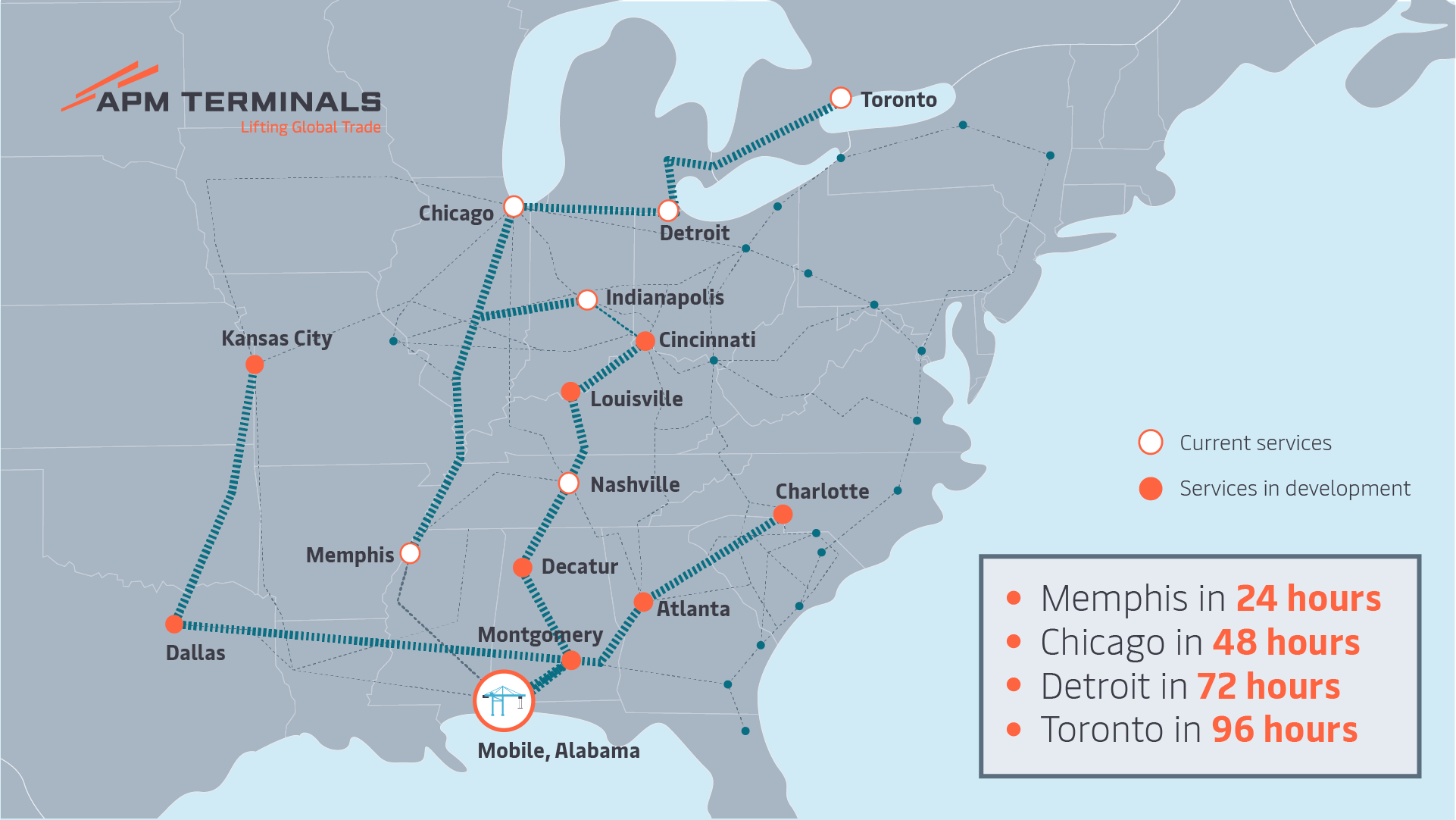
Mobile connects to a broad inland corridor across the eastern United States, with direct rail access extending from the Southeast through the Midwest and into key distribution hubs such as Chicago – with reach continuing into Canada, including Toronto.
The terminal’s central position on the US Gulf Coast, combined with strong intermodal connections, enables efficient cargo movement from vessel to inland destination across major manufacturing and consumer markets.