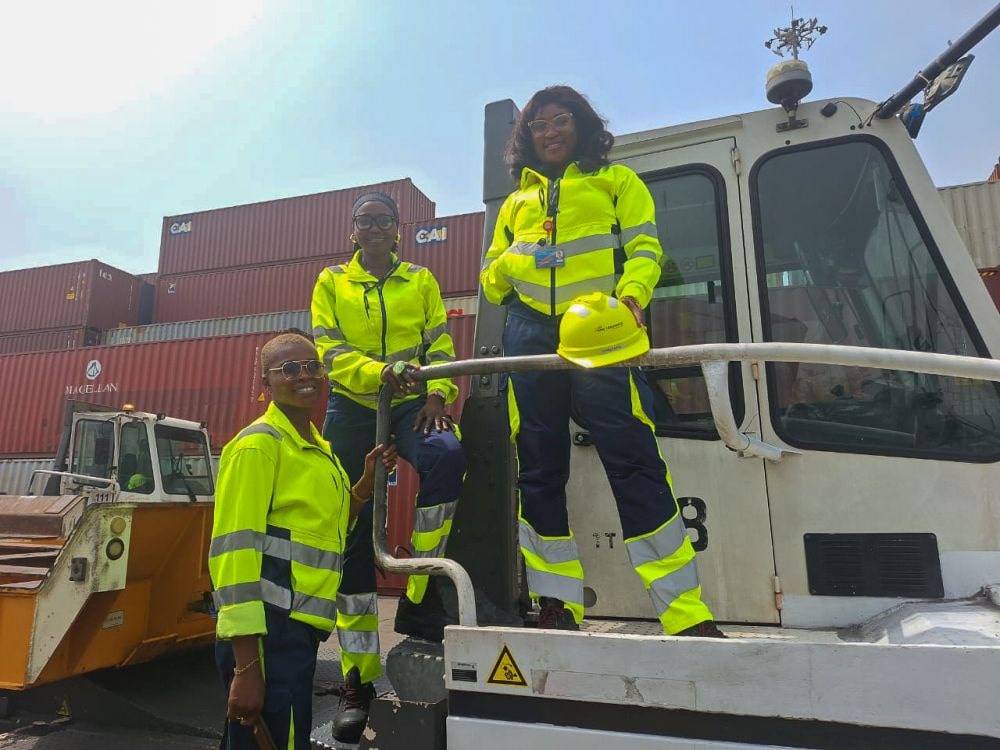
Building truck-driving skills for women in Nigeria’s logistics sector
For many women in Nigeria, careers in logistics have not always been within reach. A training programme at APM Terminals Apapa is changing that, equipping participants with the skills to operate trucks.
At Nigeria’s largest container terminal, APM Terminals Apapa, trucks rarely stop moving. They shuttle containers across yards, connect quayside operations with storage areas, and keep trade moving. At the terminal, a new training programme is helping women take on this critical role, giving them the skills to operate safely in one of the most important parts of terminal operations.
The initiative is part of a broader effort by APM Terminals Apapa to expand access to technical skills, create economic opportunity in surrounding communities, and strengthen safety culture across terminal operations.
Hands-on training
For many of the women selected for the programme, truck driving was completely new. The one-month intensive training was designed to bridge that gap. The focus was clear: build confidence, capability and safety in a high-risk operational environment.
Trainees developed practical skills such as navigating tight spaces, reversing trucks safely, and manoeuvring containers without disrupting surrounding operations. They also learned how to interpret yard layouts, identify container locations, and support the flow of cargo between ship and shore.
Safety was also embedded throughout the programme - from handling complex turns in confined spaces to operating in busy, high-risk environments where precision is critical.
Opportunities in a growing industry
By opening access to technical roles like truck driving, the programme is helping to broaden participation in Nigeria’s logistics sector, while also addressing a growing need for skilled operators.
For many of the participants, it represents more than training. It is a pathway into stable employment, new income opportunities and long-term career development in the logistics industry.
As global supply chains continue to evolve, the need for skilled, diverse and well-trained workforces is only increasing.
By investing in people and expanding access to opportunities, initiatives like this are helping ensure that the next generation of logistics professionals reflects the communities they serve, while contributing to safer, more resilient and more inclusive supply chains.