
Global trade is growing. The capacity it needs doesn’t stop at the quay.
A container terminal can handle more cargo than ever before and still leave its customers waiting. Larger vessels and more efficient shipping networks have transformed how goods move across oceans. But the roads, railways and inland connections behind many ports have not kept pace.
For much of the past 15 years, investment in landside infrastructure has lagged behind the changing demands of trade. That gap was easier to manage when there was room in the system. This year, geopolitical disruption, shifting trade routes and resilient cargo demand have exposed it.
A port’s capacity and the capacity of the supply chain it serves are two different numbers.
The challenge looks different depending on where you stand. Europe’s Northern Range ports handled around 46 million TEU last year at almost 100% utilisation, and will need room for at least 53 million TEU by 2030 and 62 million by 2035. Across Africa, some gateways need entirely new capacity to support growing economies, while others need to make better use of what they already have.
The obvious response is to build. In many places we must, and we are. But I’m convinced that building alone won’t close the gap. A port’s capacity and the capacity of the supply chain it serves are two different numbers. Too often, we plan for the first and assume the second will follow.
The pressure is only going to increase
By 2030, around 900 container vessels above 15,000 TEU are expected to be in service, twice as many as today. Each call brings thousands of containers into a port within a short window, and every one of them has to move on through the same gates, rail terminals and roads.
Trade routes are also becoming less predictable. Ports are built over decades on assumptions about where cargo comes from and where it goes. When those flows shift, as they have repeatedly in recent years, the infrastructure can’t move with them.
Much of the world’s older port infrastructure, particularly in Europe, was designed for a different generation of ships. Modernising it while keeping cargo moving can be harder than building from scratch.
And the pressure doesn’t end at the quay. In many ports, the tightest constraint is now the channel that limits vessel access, the rail connection that can’t take more cargo, or the road network already at its limit.
Capacity inside and outside the fence
Speed up the quay and, if nothing beyond it changes, you have simply moved the queue to the gate.
Terminal operators can do a great deal within their own operations. Our hub terminals supporting the Gemini network, including Rotterdam, Bremerhaven, Algeciras and Tangier, now handle more than 70% more moves per hour than a decade ago. Equipment upgrades played a role, but vital parts of the improvement came from how we work: better planning, more consistent processes and removing bottlenecks one at a time.
There is a limit, though. Speed up the quay and, if nothing beyond it changes, you have simply moved the queue to the gate.
At Pier 400 in Los Angeles, the biggest terminal on the Western hemisphere with 6,000 daily truck arrivals, average truck turn times have fallen by 55% since 2023, to around 39 minutes, while rail moves have more than doubled. Every minute a truck isn’t waiting is time spent moving cargo inland to customers looking forward to its arrival. The minute-math and hours saved are tangible.
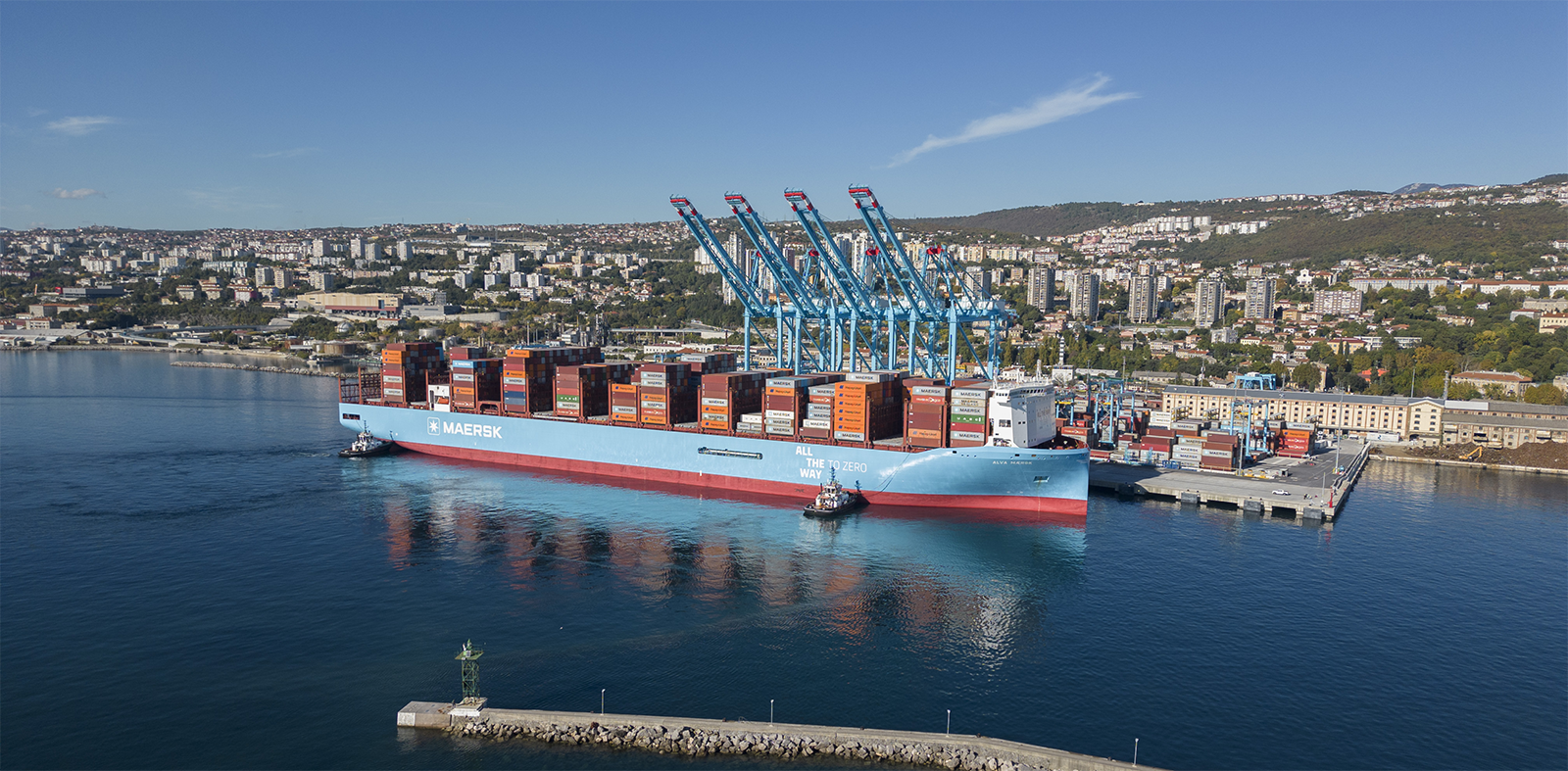
Rijeka Gateway in Croatia shows what happens when terminal capacity and inland connections are developed together. A year after opening, trucks turn around in an average of 15 minutes, and new rail links connect the gateway to Serbia, Hungary and Austria. That is capacity created for businesses across Central Europe, not just for the terminal. And it can move cargo from over-utilised terminals in the North – to the south of the continent and closer to the customers.
Investment only works when the wider system works
We are investing across our network because we believe in the long-term importance of the gateways we operate. Those investments deliver most when the infrastructure around them develops at the same pace.
In Rotterdam, together with Hapag-Lloyd, we are adding 1,000 metres of deep-sea berth at Maasvlakte II, doubling its length. In Spain, we have extended our concession in Valencia and are investing in new capacity. Spanish ports can strengthen their position in global trade, but that depends on timely permitting and stronger rail connections inland.
In Germany, we’re investing around €1 billion in Bremerhaven. What that delivers for German exporters depends just as much on improving access through the Weser, so larger vessels can call reliably. A terminal built for tomorrow’s vessels behind a channel built for yesterday’s is an opportunity half taken.
None of this works if terminal operators, governments and infrastructure providers plan in isolation. There is little value in expanding a terminal years before the rail or road behind it is ready. Getting calls from bigger vessels to reduce the cost of doing trade is worth a little, if ships are waiting at the quay or capacity going inland is constrained.
What we ask of our partners is straightforward. Plan the whole chain together, so that channels, rail and road are sequenced with terminal capacity rather than added years later. Make permitting predictable, particularly for modernisation projects at terminals that have to keep running while the work is done. And match long-term commitments with long-term certainty: concessions run for 30 to 50 years, and the frameworks around them need to support investment over that horizon.
Building more capacity matters. Making sure it works together matters more.
Building resilience before the next disruption
None of us can predict the next disruption. But a supply chain already running at its limit turns small problems into big ones, while one that runs reliably has room to respond. This is crucial as a part of a nation’s critical infrastructure.
So, I hope our industry spends less time asking how many new quays the world needs and more time asking where capacity is being lost today – and who needs to act to win it back.
Building more capacity matters. Making sure it works together matters more.
Lifting global trade
From port efficiency to supply chain resilience, explore insights and analysis on the topics that are shaping global trade and lifting standards across the industry.