
Port efficiency: keystone of global trade
Why port efficiency matters to global trade
APM Terminals is now represented in nine of the world’s top 20 most efficient ports in the latest World Bank Container Port Performance Index (CPPI) - more than any other terminal operator. This matters because high-performing ports help customers move cargo more reliably, lower supply-chain costs and strengthen trade competitiveness.
What makes port performance matter

The performance of a port extends far beyond its gates. It influences the reliability of supply chains, the competitiveness of trade corridors and the ability of economies to connect with global markets. For customers, efficient ports can mean greater schedule reliability, better planning and increased cost efficiencies. For economies, they can strengthen trade competitiveness, attract investment and support growth.
Given the critical role ports play in enabling trade, understanding how they perform has become increasingly important. That is why the CPPI, published annually by the World Bank and S&P Global Market Intelligence, is widely watched across the industry. Covering more than 400 container ports, it measures how efficiently ports handle vessels, using time spent in port as a key indicator.
Performance that builds confidence
The value of a high-performing port is not only measured in moves or minutes, but in the confidence it creates for businesses, consumers and economies that depend on trade every day.

Sustained port performance is built over time through investment in infrastructure, equipment, technology and people. The ports that perform consistently well are those that combine operational discipline with long-term partnership across the trade ecosystem. This in turn strengthens reliability, improves cargo flows and supports more competitive supply chains.
Leading ports across the network
At the heart of terminal operations is APM Terminals' proprietary Business System - built on Lean principles - driving operational excellence and a culture of continuous improvement. It brings together plans, processes and performance with an engaged and empowered workforce - lifting standards that anticipate and adapt to customer needs.
This performance is reflected across key trade gateways in the APM Terminals network, with ports in the Middle East, Africa, Asia and Europe recognised among the world's most efficient in the CPPI 2025 rankings.
Ports in the top 20 include:

#3
Port of Salalah, Oman
Recognised as the most efficient container port in the Middle East, North Africa and Arabian Gulf region.
#6
Tanger Med, Morocco
The highest-performing port in the Mediterranean and one of the world's leading transshipment hubs.
#11
Cai Mep, Vietnam
Recognised as Southeast Asia's most efficient container port and a key gateway connecting Vietnam to global markets.
#12
Algeciras, Spain
Ranked the leading container port in Europe and Central Asia, serving as a critical gateway between Europe, Africa and the Americas.
#13 Hai Phong, Vietnam
#14 Xiamen, China
#15 Port Said, Egypt
#18 Port of Tanjung Pelepas, Malaysia
#19
Khalifa Bin Salman Port, Bahrain
Ranked second globally for efficiency improvement since 2020.
Additional recognition
Several other ports where APM Terminals operates were recognised as regional leaders.
- Aarhus in Denmark was named Northern Europe's most efficient container port
- Jawaharlal Nehru Port (Nhava Sheva) was named the most efficient container port in India
- Savona-Vado was named the highest-performing container port in Italy.
World Bank Container Port Performance Index
The full World Bank Container Port Performance Index (CPPI) report can be viewed on the World Bank website.
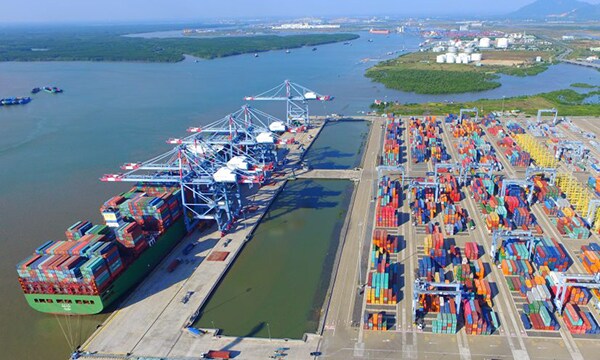
Cai Mep International Terminal (CMIT) in southern Vietnam
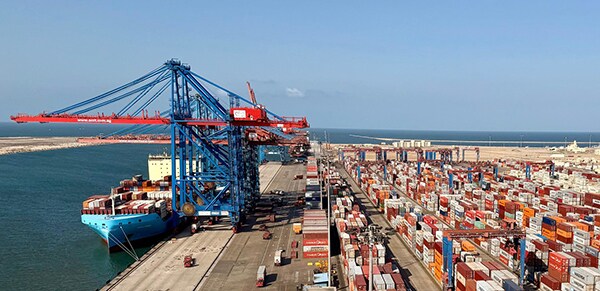
APM Terminals' Suez Canal Container Terminal (SCCT) in Port Said, Egypt
Lifting global trade
Find out more about how APM Terminals is helping companies grow and countries achieve their ambitions on our Insights page.
Here you can find insight papers, interviews, white papers and opinion pieces that are lifting standards in our industry.