

Unlocking port potential. Empowering growth.
Africa is home to some of the world’s fastest‑growing economies and sits at the crossroads of global trade. From resource exports to rising manufacturing and consumer markets, the continent’s trade potential continues to expand. Yet many key trade corridors still face congestion, fragmented processes and a history of under‑investment. These factors drive up the cost of trade and limit competitiveness.
Transparent public‑private partnerships provide governments with a proven means to upgrade ports and inland corridors, connect them into integrated systems and unlock sustained trade growth potential.
Compete with end-to-end corridor performance
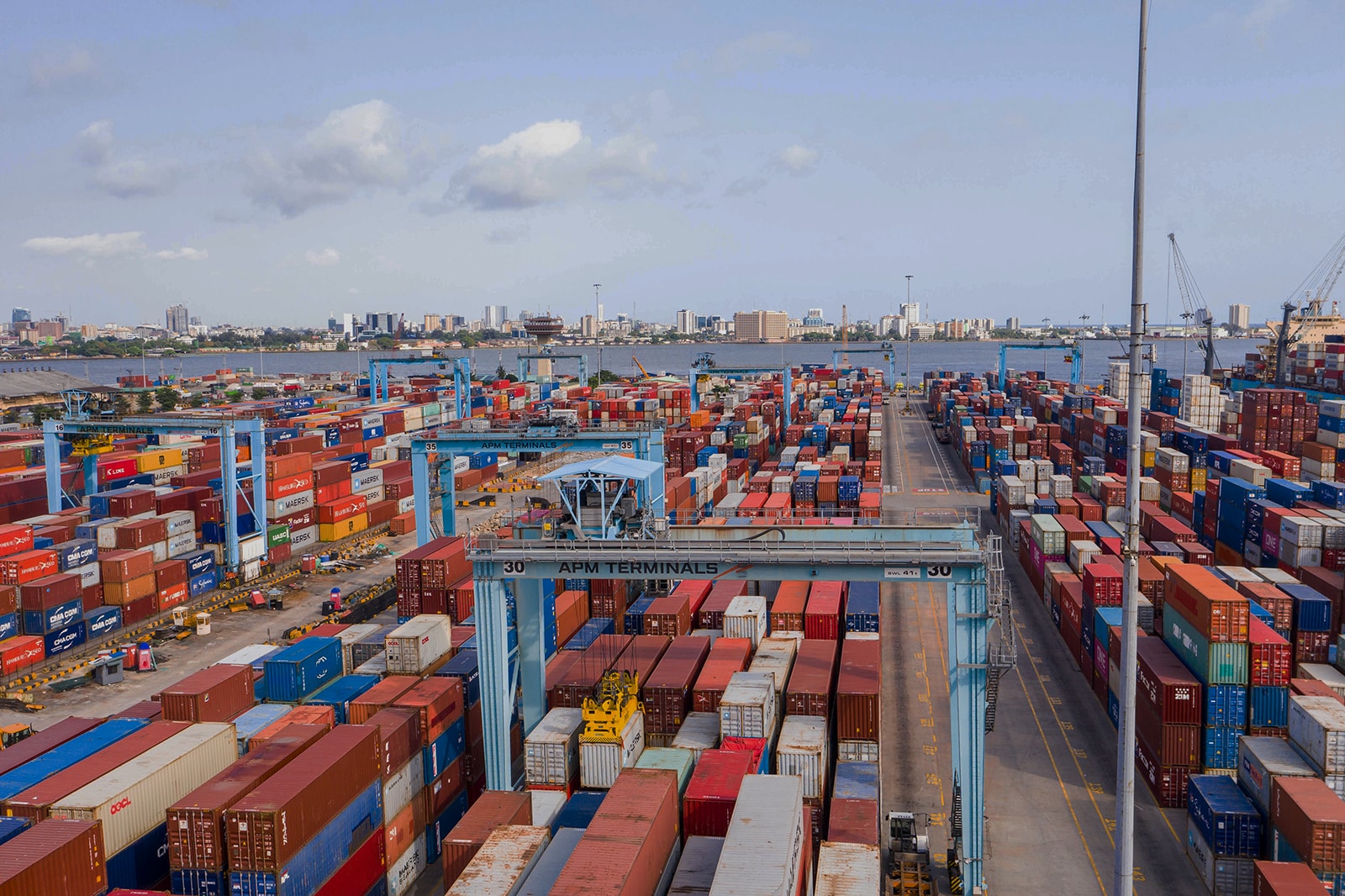
As a preferred strategic partner for governments, APM Terminals – part of A.P. Moller‑Maersk – invests in and operates future‑ready terminals that list standards of safety and productivity while delivering predictable port performance.
This port performance is extended beyond the gate, integrating ocean and inland logistics networks. Supported by end‑to‑end digital visibility. Importers and exporters benefit from more reliable flows and lower costs, while countries are supported in transforming logistics bottlenecks into sustained trade growth and stronger investment confidence.
Resilience through future‑ready, predictable ports
Predictability is also one of the most effective drivers of decarbonisation. Reducing waiting times at sea, alongside berth and at the gate lowers both operating costs and emissions, eliminating inefficiency across the port call.
Smart planning and data‑driven operations help terminals perform consistently today, while preparing for tighter environmental regulation tomorrow. Shared performance standards and transparent operations strengthen supply‑chain resilience, enabling ports and cargo flows to remain reliable when unforeseen challenges arise.
Communities grow alongside ports
Trade growth matters most when it creates opportunity close to home. Investment in skills, safety and local supplier networks supports stronger local businesses, builds leadership pipelines and opens the door to long‑term careers. Over time, port‑led development becomes a source of shared prosperity for surrounding communities and the wider economy.
Specialised logistics networks, including cold‑chain solutions, extend this impact by helping national industries move higher‑value goods into global markets with greater reliability. Together, these capabilities support better jobs, more resilient local economies and investment outcomes that endure.


Lifting trade across Africa
Across Africa, trade performance is being shaped by the same fundamentals: long‑term investment, reliable infrastructure and skilled people. Together, these elements strengthen supply chains, lower emissions and ensure that trade delivers lasting value for national economies and local communities.
How we're lifting standards across Africa...

APM Terminals Liberia and GLS Group announce landmark partnership

A faster, more cost-effective rice supply chain in Monrovia

APM Terminals Apapa supports Ojora Olugbode Health Centre

APM Terminals invests in new barge services to support Nigerian growth

How Tema’s port expansion is shaping West Africa’s trade future
Insights

APM Terminals in Egypt celebrates 2.2 million TEU expansion

APM Terminals empowers Apapa youth with 51 scholarships
Electrifying container transport in Nigeria
Insights