Rijeka Gateway
Transforming trade for tomorrow
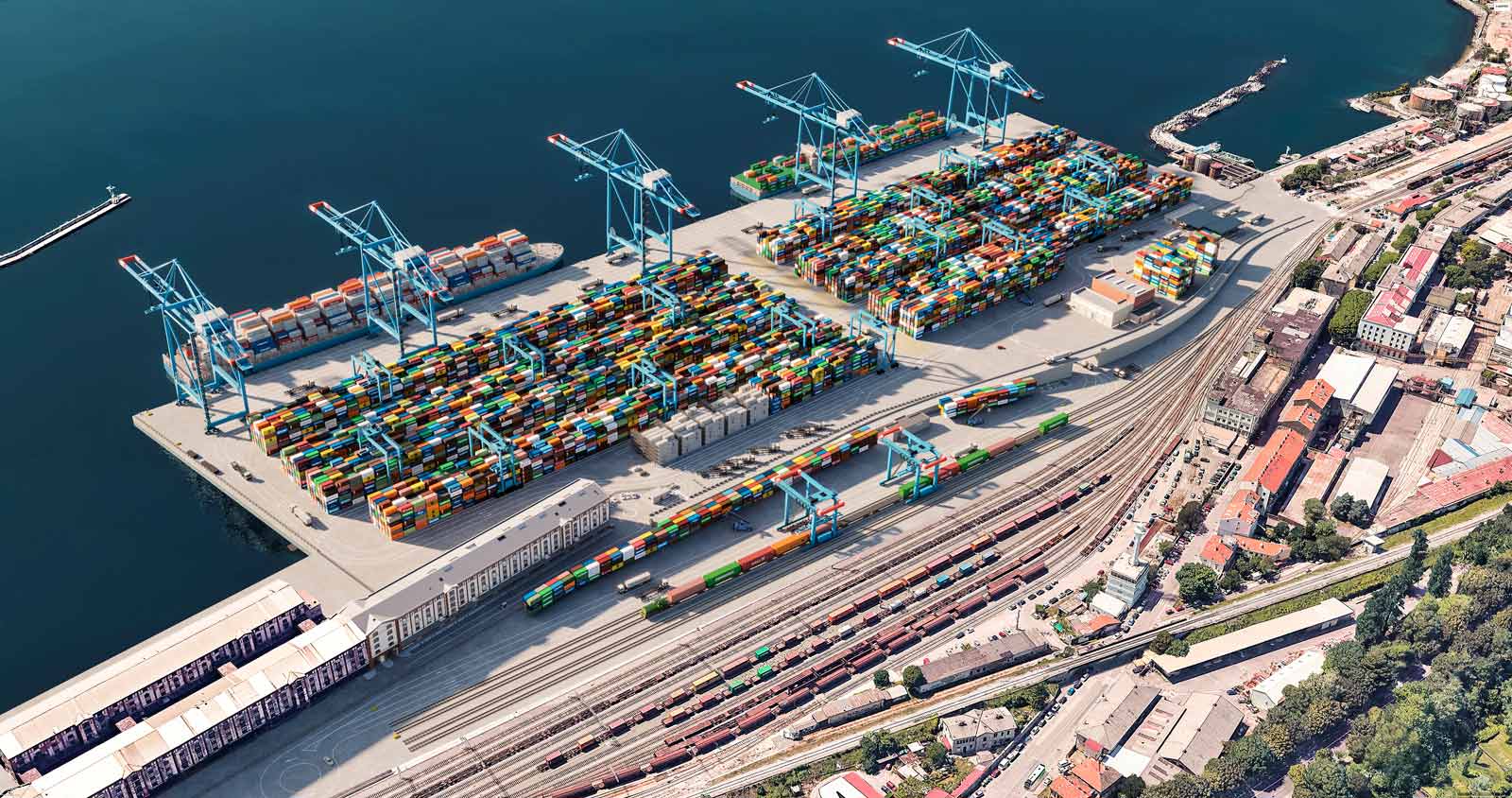
Rijeka Gateway is bringing technology, innovation and modern automation to Croatia’s North Adriatic coast, transforming not only the port of Rijeka but the country and wider region. As a trusted partner that delivers on time and with maximum efficiency, we focus on the standards required today while shaping those that will define tomorrow. At Rijeka Gateway, we’re not just building a terminal – we’re lifting the standards of trade.
Rijeka Gateway is a joint venture between APM Terminals and ENNA Group, one of the region’s fastest-growing companies. ENNA brings extensive experience across port, rail and storage activities, positioning the joint venture as a uniquely integrated logistics operator for Croatia and Central Europe.
In November 2021, the partners signed a concession agreement to design, construct and operate a state-of-the-art container terminal.
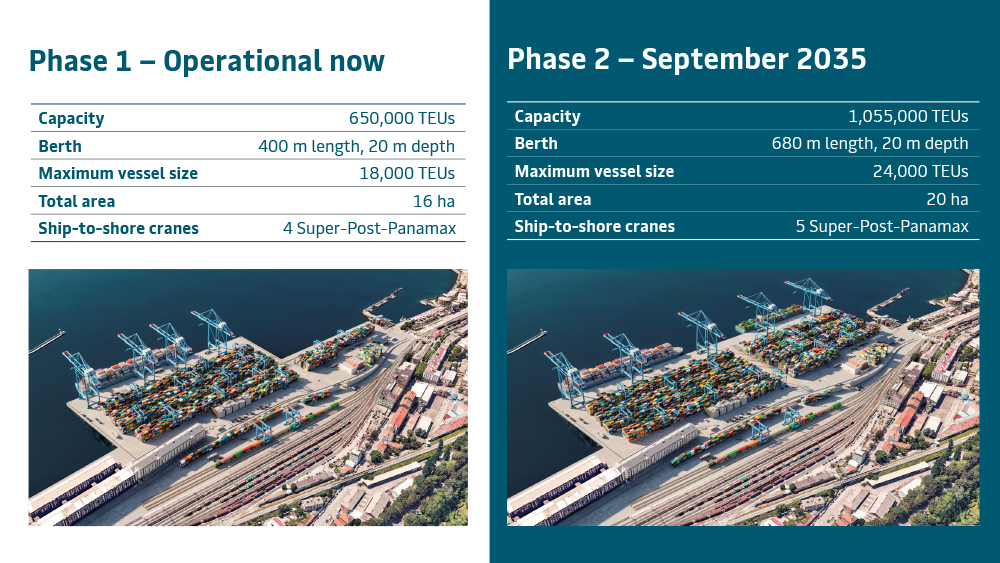
The first phase, worth €210 million, was completed in September 2025 and included construction of the terminal, the installation of advanced container cranes and the introduction of digital and logistics support systems. The second phase, representing a further €180 million investment, is planned for completion by 2035.
The terminal currently features a 400-metre-long, 20-metre-deep quay with an annual handling capacity of 650,000 TEU and the ability to accommodate vessels up to 18,000 TEU. Following Phase 2, the quay will extend to 680 metres, capacity will increase to 1,055,000 TEU, and the terminal will be able to serve vessels up to 24,000 TEU.
Rijeka Gateway is almost fully electrified and equipped with remotely operated cranes, setting a new benchmark for sustainability and operational efficiency in the region. The terminal uses remote-controlled, electrically powered handling equipment, fully aligned with APM Terminals’ decarbonisation ambitions and its Terminal of the Future vision.
Terminal facts
Connectivity
With a reliable and efficient rail link to the hinterland, Rijeka Gateway connects seamlessly to the rest of Croatia and the wider Central European region. Combined with strong nautical capability, the terminal is uniquely positioned as a strategic gateway for regional supply chains.
Economic contribution
Rijeka Gateway is a major strategic project for Croatia and its neighbouring markets. As a key entry point into Central Europe, the terminal strengthens the national economy, expands access to global logistics networks and creates new opportunities for businesses.
The terminal currently employs more than 330 people, with substantial growth expected as operations scale, alongside many additional indirect jobs across supporting industries. According to a 2025 study by the Croatian Chamber of Economy, the economic impact of the Port of Rijeka could increase more than 3.5 times over the next 15 years, rising from €672.6 million in 2025 to nearly €2.44 billion in 2040. Employee income in port-related sectors is projected to grow from €110 million to €165 million, with job numbers potentially increasing by over 40%.
Sustainability
Rijeka Gateway is one of the most modern and environmentally responsible container terminals in its part of Europe. During early construction, 403 tonnes of asbestos were safely removed, and the terminal continues to prioritise responsible community engagement.
A private 5G network connects all cranes, vehicles and equipment in real time, improving operational efficiency, enabling predictive maintenance and supporting smarter energy use. Around 95% of terminal equipment is electrically powered from renewable sources, significantly reducing emissions.
Advanced water-management systems filter stormwater before discharge, while sanitary water is connected to the municipal network. Noise reduction is achieved through soft-landing crane technology and white-noise reversing signals, and LED lighting with controlled beams to minimise light pollution. Together, these features make Rijeka Gateway a model for sustainable, technologically advanced and community-focused terminal operations.